

Discover Japandi outfits with a minimalist capsule wardrobe inspired by Japan. Natural fabrics, earthy tones, and 15 serene pieces for calm, effortless style.
You open your closet. It’s crowded. And yet, nothing feels peaceful. Nothing feels deliberate. Nothing feels like you.
Japandi offers another path. It’s where two design worlds meet Japanese minimalism and Scandinavian functionality merged into a single tranquil aesthetic. Japanese design contributes quiet restraint and a deep respect for natural materials. Scandinavian design brings warmth, practicality, and everyday comfort.
Translated into fashion, Japandi is understated elegance you can genuinely live in. It’s about garments that feel as good against your skin as they look in the mirror. Pieces that don’t demand attention but quietly make you feel composed.
In this guide, I’ll show you exactly how to build a Japandi minimalist capsule wardrobe with 15 pieces inspired by Japan. No overwhelming rules. Just calm, considered style you’ll reach for every day.
Let’s begin.
What Exactly Is Japandi Style?
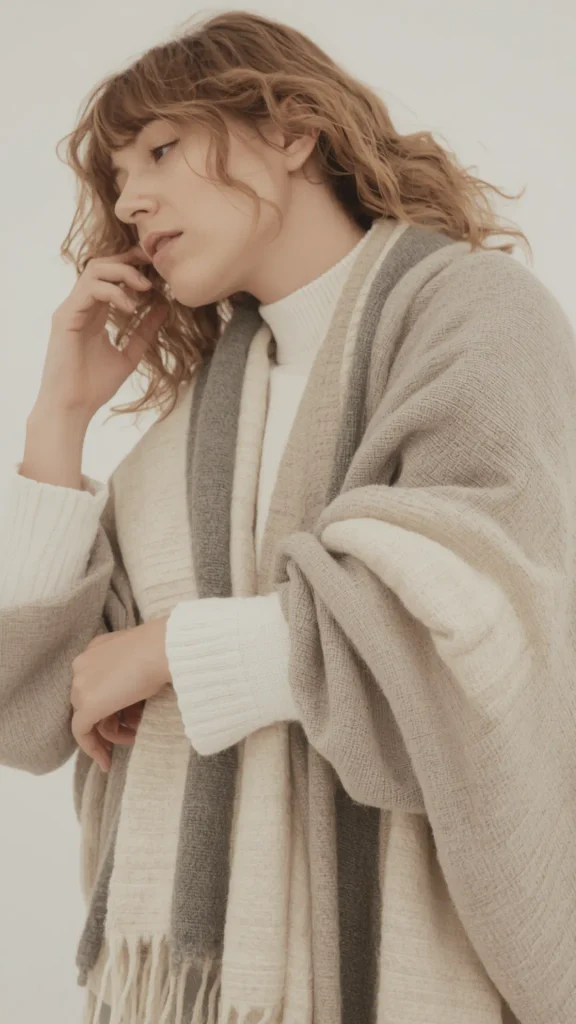
Japandi is a design movement that blends Japanese minimalism with Scandinavian hygge. In home interiors, it looks like pale wood, linen throws, handmade ceramics, and open space. In fashion, the same principles translate directly.
The defining characteristics of Japandi style:
- Natural materials – linen, cotton, wool, silk, and hemp
- Muted, earthy tones – oatmeal, stone, charcoal, clay, moss, and off-white
- Relaxed silhouettes – nothing tight, nothing fussy
- Visible craftsmanship – quality stitching, natural textures, considered details
- Wabi-sabi philosophy – finding beauty in imperfection and impermanence
Japandi isn’t about looking trendy. It’s about looking settled like someone who knows exactly who they are.
Save-worthy tip: “Japandi style isn’t about having less. It’s about having only what brings you calm.”
The Japandi Color Palette
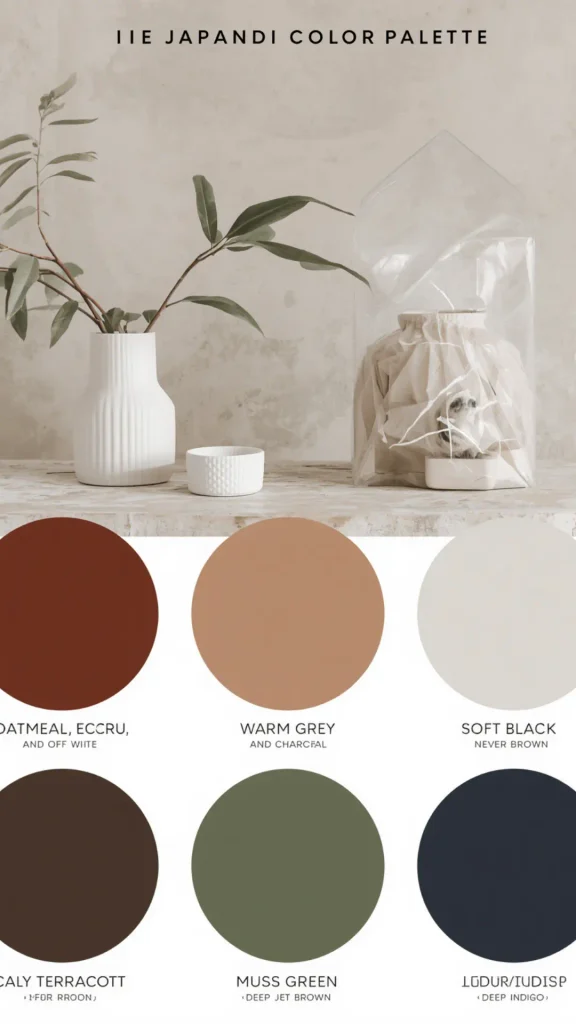
Japandi colors come straight from nature and they never clash.
Your foundation neutrals:
- Oatmeal, ecru, and off-white
- Stone grey, warm grey, and charcoal
- Soft black (never harsh jet black)
- Clay, terracotta, and warm brown
- Moss green and deep indigo
The accent tones:
- Muted indigo (a nod to traditional Japanese dyeing)
- Soft rust or burnt sienna
- Deep forest green
The formula: Choose 3-4 core neutrals and 1-2 earthy accents. Every piece should live inside this palette then everything works together automatically.
Save-worthy tip: “If your colors all come from the same landscape, they’ll never argue with each other.”
The 15-Piece Japandi Capsule Wardrobe
Here are the timeless pieces that form the foundation of a Japandi capsule wardrobe. Each one is chosen for its natural fabric, relaxed fit, and quiet versatility.
Tops (5 Pieces)
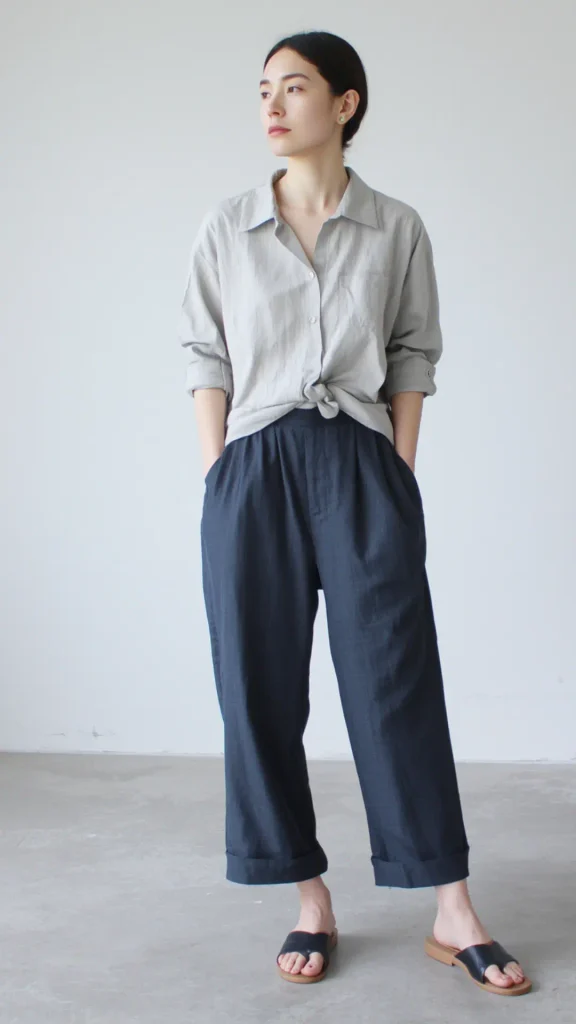
1. The Linen Shirt
A relaxed linen shirt in off-white or stone is the cornerstone of Japandi dressing. It’s breathable, ages beautifully, and looks better slightly wrinkled which is the whole point of wabi-sabi.
How to style it: Tucked loosely into wide-leg trousers, worn open over a camisole, or tied at the waist.
2. The Cotton Crewneck Tee
Choose a heavyweight organic cotton tee in oatmeal, ecru, or soft grey. It should feel substantial, not flimsy. Japandi style values fabric quality above all else.
How to style it: Half-tucked into trousers with simple leather sandals.
3. The Fine Merino Knit
A lightweight merino wool sweater in charcoal, moss, or clay. Merino is the perfect Japandi fabric natural, temperature-regulating, and beautifully soft.
How to style it: Layered over a collared shirt, or worn alone with wide trousers.
4. The Oversized Cotton Poplin Shirt
A slightly oversized button-down in white or pale grey. The looseness is intentional Japandi never looks tight or constrained.
How to style it: Buttoned to mid-chest, sleeves rolled, paired with relaxed trousers.
5. The Indigo-Dyed Blouse or Overshirt
Indigo is deeply rooted in Japanese textile tradition. A simple indigo-dyed top adds depth to your neutral palette without breaking the calm.
How to style it: Worn as a light layer over a tee, or buttoned as a standalone piece.
Bottoms (4 Pieces)
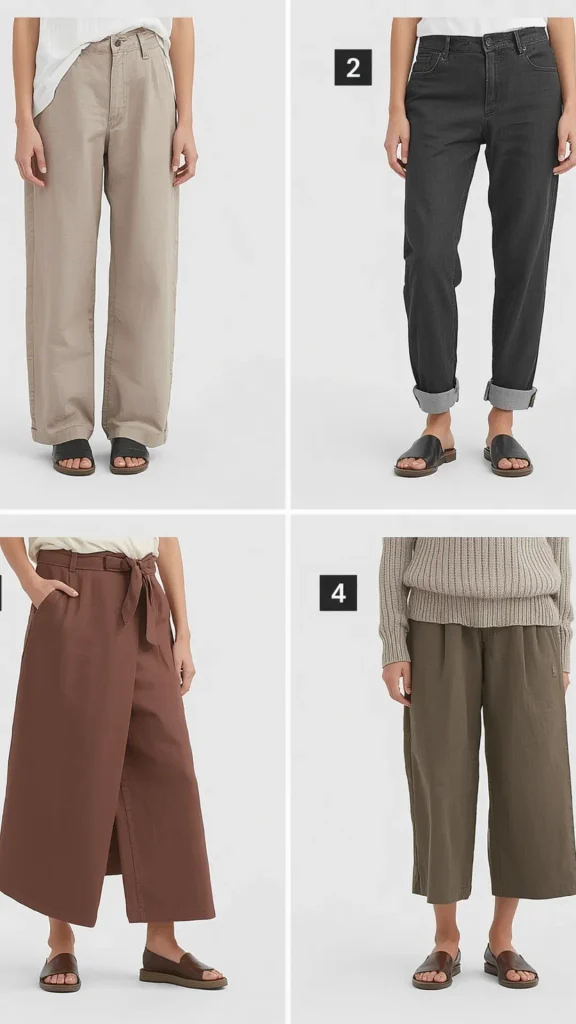
6. The Wide-Leg Trousers
Wide-leg trousers in linen, cotton, or wool-blend are essential. Choose stone, charcoal, or clay. The silhouette should be fluid never stiff.
How to style them: With a tucked linen shirt for an elevated look, or a simple tee for everyday wear.
7. The Relaxed Straight-Leg Jeans
A pair of straight-leg jeans in a soft, faded indigo. Avoid heavy distressing Japandi favors clean, honest denim.
How to style them: Rolled at the ankle with simple leather sandals or loafers.
8. The Wrap or A-Line Midi Skirt
A midi skirt in linen or cotton adds softness and movement. Choose a muted tone like clay, moss, or stone.
How to style it: With a fine knit and flat leather shoes.
9. The Pleated Trousers
Pleated trousers in a warm neutral offer quiet structure. They look polished without feeling formal very much in the Japandi spirit.
How to style them: With a simple tee and an oversized shirt layered on top.
Save-worthy tip: “Japandi bottoms should move with you, not restrict you. If you can’t sit on the floor comfortably, it’s not Japandi.”
Outerwear (3 Pieces)
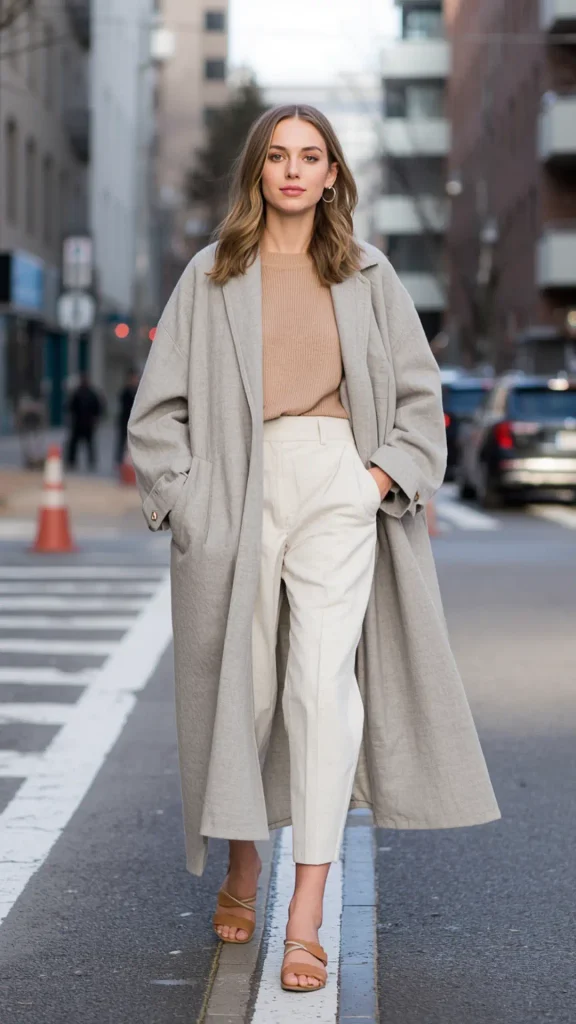
10. The Oversized Wool Coat
An oversized coat in charcoal, camel, or warm grey. The cut should be generous, the fabric substantial, and the lines clean. This is your investment piece.
How to style it: Over literally everything knits, shirts, dresses, and trousers.
11. The Linen or Cotton Kimono Jacket
A kimono-style jacket is the most literal nod to Japanese influence. Choose a longer, unstructured silhouette in linen or textured cotton.
How to style it: As a light layer over a tee and wide trousers, or wrapped over a slip dress.
12. The Simple Trench or Utility Coat
A minimal trench in stone or ecru. No loud hardware, no excessive details just clean lines and natural fabric.
How to style it: Belted loosely, sleeves pushed up.
Dresses (1 Piece)
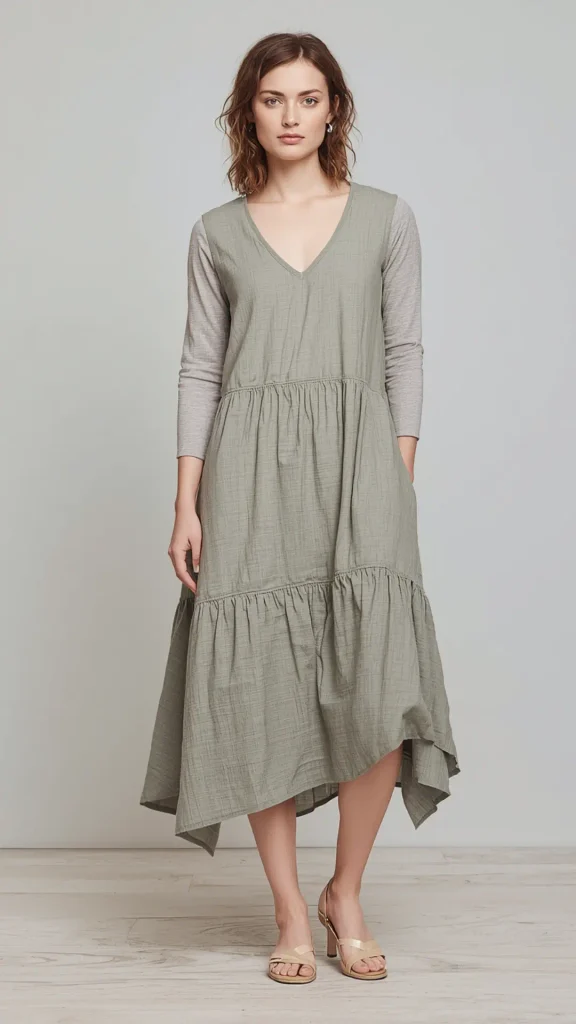
13. The Relaxed Midi Dress
One dress is enough when it’s this versatile. Choose a simple midi in linen or cotton moss green, stone, or indigo. An A-line or shift silhouette works best.
How to style it: Alone with flat sandals in summer, layered over a turtleneck and leggings in winter.
Shoes (2 Pairs)
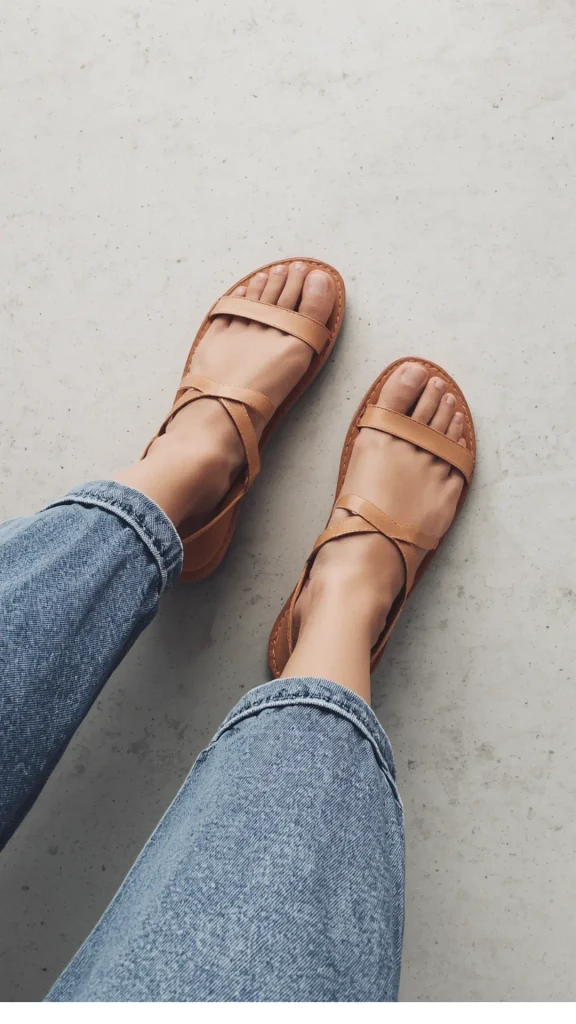
14. The Minimal Leather Sandals
Simple leather sandals in tan or black. No embellishments, no logos just clean straps and quality leather that softens over time.
How to style them: With literally every piece in this capsule.
15. The Flat Leather Shoes or Simple Sneakers
Low-profile leather loafers, or minimalist canvas sneakers in off-white. Comfort is non-negotiable in Japandi style.
How to style them: With trousers, skirts, or dresses.
10 Japandi Outfit Formulas
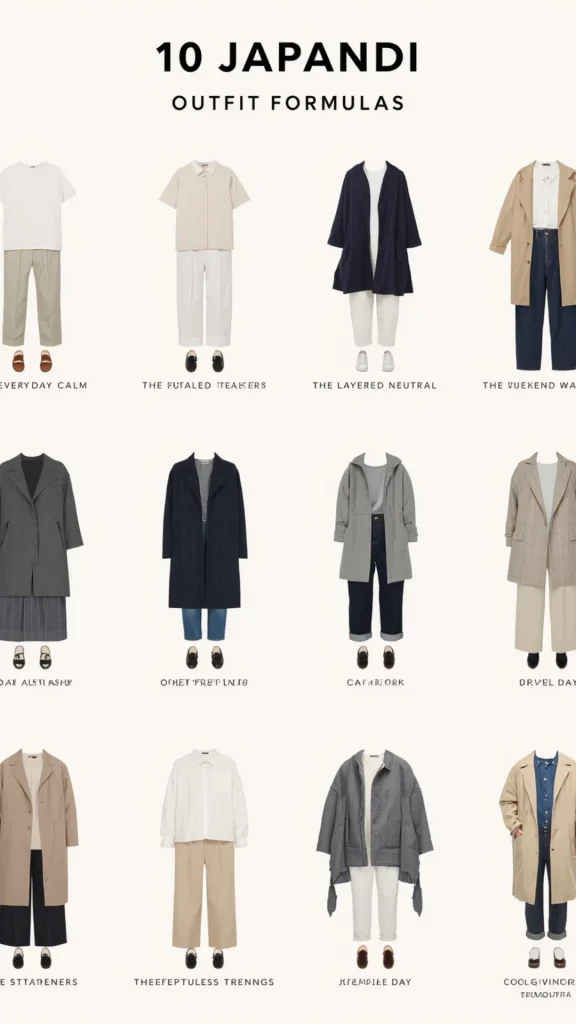
Here are ten combinations using your 15 pieces:
1. The Everyday Calm
Oatmeal tee + wide-leg trousers + linen kimono jacket + leather sandals
2. The Quiet Professional
Cotton poplin shirt + pleated trousers + oversized wool coat + flat leather shoes
3. The Weekend Wanderer
Linen shirt + relaxed jeans + simple trench + minimal sneakers
4. The Layered Neutral
Fine merino knit + wide-leg trousers + wool coat + loafers
5. The Soft Statement
Indigo overshirt + straight-leg jeans + leather sandals
6. The Effortless Evening
Relaxed midi dress + linen kimono jacket + leather sandals
7. The Cafe Morning
Heavyweight tee + midi skirt + kimono jacket + simple sneakers
8. The Cool Weather Edit
Merino knit + pleated trousers + oversized coat + loafers
9. The Travel Day
Linen shirt + relaxed jeans + trench + minimalist sneakers
10. The Full Neutral
Oatmeal tee + stone trousers + warm grey coat + leather sandals
Save-worthy tip: “When every piece shares a palette, you can dress in the dark and still look intentional.”
5 Japandi Styling Principles
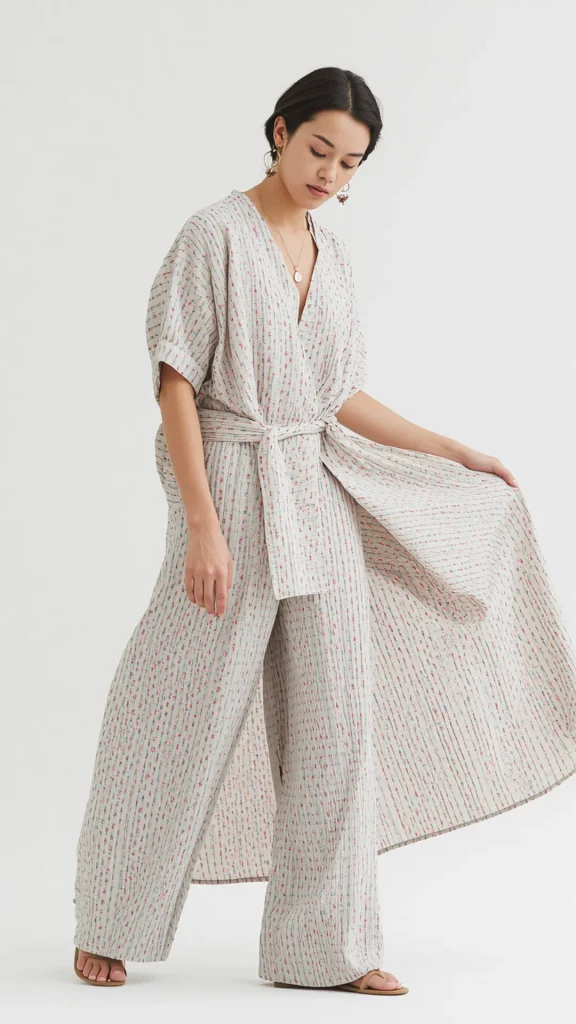
1. Fabric Over Everything
Japandi is a tactile aesthetic. Linen, cotton, wool, silk, and hemp. If you can’t feel the quality with your eyes closed, it doesn’t belong.
2. Embrace Looseness
Nothing should cling. Nothing should restrict. Japandi silhouettes are relaxed, flowing, and comfortable.
3. Limit Your Accessories
One or two simple pieces a leather belt, a wooden bead necklace, a minimal watch. Resist the urge to layer on more.
4. Let Wrinkles Be
Linen creases. Cotton softens. Wool pills slightly. Japandi accepts these as signs of life, not flaws.
5. Choose Longevity
Buy pieces you’ll wear for a decade, not a season. Repair rather than replace. This is the sustainable heart of Japandi philosophy.
How to Build Your Japandi Capsule Wardrobe
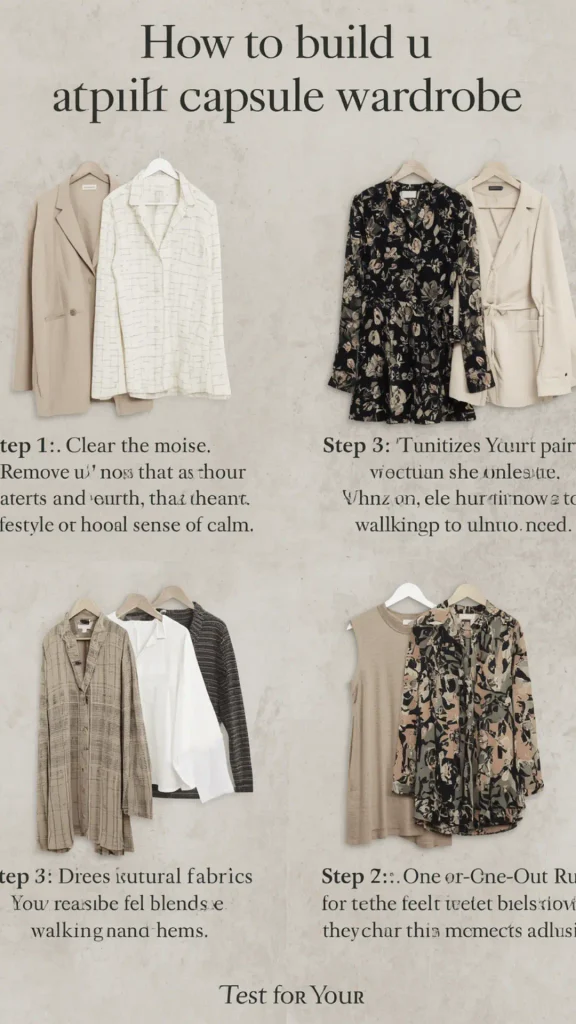
Step 1: Clear the Noise
Remove anything that doesn’t fit your palette, your lifestyle, or your sense of calm.
Step 2: Define Your Palette
Pick 3-4 neutrals and 1-2 earthy accents. Write them down. Stick to them.
Step 3: Prioritize Natural Fabrics
Linen, cotton, wool, silk, hemp. Avoid synthetic blends where possible.
Step 4: Focus on Fit and Flow
Everything should feel comfortable when sitting, walking, and moving.
Step 5: Apply the One-In-One-Out Rule
For every new piece, one old piece leaves. Keep the wardrobe breathing.
Step 6: Test for a Month
Wear only your capsule for 30 days. Notice what feels calm and what feels off then adjust.
Final Thoughts
Japandi outfits aren’t about making a statement. They’re about creating a feeling. Calm. Grounded. Unhurried. The kind of style that lets you show up rather than your clothes.
A Japandi minimalist capsule wardrobe isn’t built in a weekend and that’s the point. It’s a slow, intentional practice. You add pieces as you find them. You repair what you own. You wear things until they wear out, not until they go out of style.
Save-worthy tip: “Japandi style is what happens when you stop trying to look like everyone else and start dressing like yourself.”
Start small. Choose natural. And enjoy the quiet confidence of a wardrobe that finally feels like home.
You Might Like The Classic Capsule Wardrobe: A Guide to Investing in Quality Over Quantity
The Classic Capsule Wardrobe: Why Quality Always Beats Quantity
Nordic Style Simplified: Build a Scandinavian Capsule Wardrobe for 2026
Elevate Your Style: 15 Classy Capsule Wardrobe Pieces for 2026
CTA
Which of these Japandi pieces speaks to you most? Have you tried building a wardrobe around natural fabrics and muted tones? Drop a comment below I’d love to hear how your capsule journey is going. Your ideas might inspire someone else to embrace a calmer closet. Let’s talk Japandi style! 💬